
Meth contamination has become one of the most significant hidden risks in Queensland’s rental and property market. Because meth residue is invisible, odourless, and often discovered only after a tenant moves out or a property changes hands, meth contamination disclosure laws QLD have become increasingly important for landlords, sellers, buyers, and property managers.
This guide breaks down your legal obligations, when disclosure is required, how meth testing fits into compliance, and what happens if contamination is found.
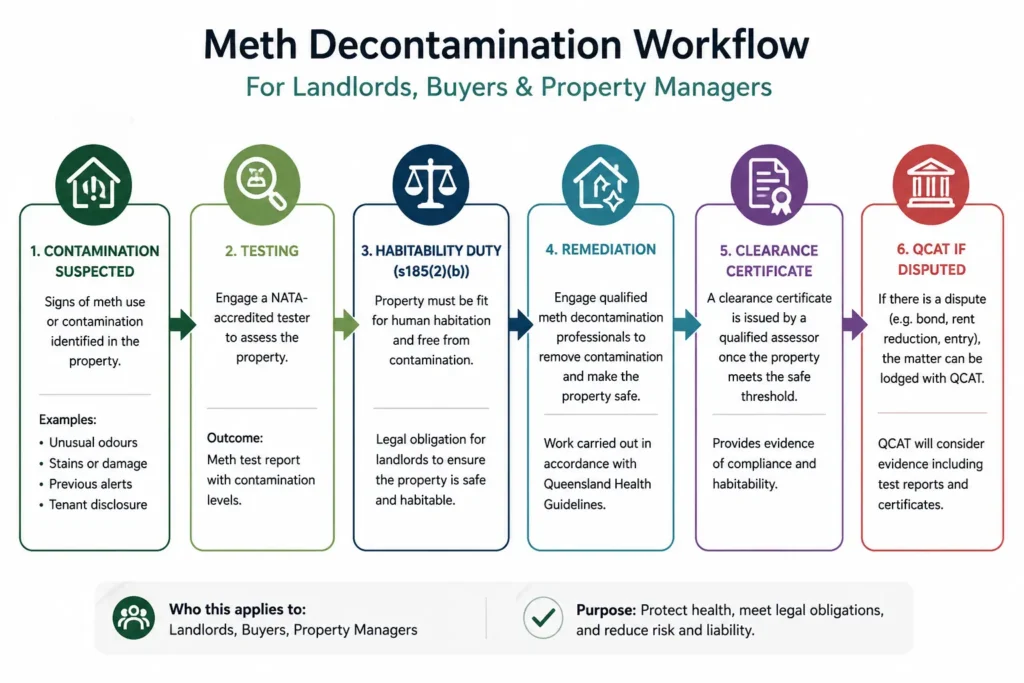
What Are Meth Contamination Disclosure Laws in QLD?
Meth contamination disclosure laws QLD refer to the legal obligations landlords, sellers, and agents have to inform tenants or buyers when a property is contaminated with meth residue above recommended safety thresholds.
Queensland legislation requires all rental properties to be safe, clean, and fit for habitation. A property contaminated with meth residue above national guidelines does not meet this standard.
Disclosure laws exist to protect tenants and buyers from unknowingly living in a contaminated property and to prevent legal disputes, financial losses, and health risks.
Why Meth Contamination Disclosure Laws QLD Matter for Property Safety
Meth residue can linger long after drug use or manufacturing has occurred. It can embed itself in:
Walls
Carpets
Ceilings
Air‑conditioning systems
Kitchens and bathrooms
Even low‑level contamination can cause headaches, respiratory issues, behavioural changes in children, and long‑term health concerns.
Because the contamination is invisible, meth contamination disclosure laws QLD ensure that tenants and buyers are not unknowingly exposed to unsafe living conditions.
Do Landlords Have to Disclose Meth Contamination in QLD?
Yes — landlords must disclose known contamination.
Under Queensland tenancy legislation, landlords must provide a property that is safe and habitable. If meth contamination is confirmed through testing, disclosure is mandatory.
This includes situations where:
A property has tested positive for meth residue
A property was previously used as a meth lab
Remediation has been completed but the property has a contamination history
Even if remediation has occurred, failing to disclose the property’s history can be considered misleading. This is why compliance with meth contamination disclosure laws QLD is essential.
Legal Thresholds for Meth Contamination in QLD
Queensland follows the national guideline of 0.5 μg/100cm² as the recommended safe level for meth residue.
Anything above this threshold is considered contamination and must be addressed before a property can be legally leased or sold.
Under meth contamination disclosure laws QLD, landlords must ensure the property meets this threshold before leasing it. If testing shows levels above 0.5 μg, the property is not legally fit for habitation.
Do Sellers Need to Disclose Meth Contamination in QLD?
Yes — sellers must disclose known issues that may affect the property’s value or safety. Meth contamination falls under this category.
If a seller knows the property:
Has tested positive for meth
Was previously used as a drug lab
Has undergone meth remediation
They must disclose this information to potential buyers.
Failure to do so can lead to legal action, contract disputes, and claims of misleading or deceptive conduct. Real estate agents also have a duty of care to disclose known contamination.
Should Buyers Request Meth Testing Under QLD Disclosure Laws?
Yes — buyers should always request meth testing during the inspection period.
Because meth contamination disclosure laws QLD only require disclosure of known contamination, buyers should protect themselves by verifying the property’s condition independently.
Meth contamination is often invisible, and many buyers assume a clean‑looking property is safe. In reality, contamination can linger for years.
What Happens if Meth Contamination Is Found During a Tenancy?
If contamination is discovered during a tenancy, the landlord must:
Disclose the results to the tenant
Provide temporary accommodation if the property is unsafe
Conduct clearance testing after remediation
Tenants may be entitled to compensation if the property was unsafe at the start of the lease.
This is why proactive compliance with meth contamination disclosure laws QLD is essential for landlords and property managers.
How Property Managers Should Handle Meth Disclosure in QLD
Property managers play a critical role in ensuring compliance. Best practice includes:
Asking landlords about the property’s history
Recommending meth testing between tenancies
Keeping records of all testing and remediation
Disclosing contamination to new tenants or buyers
Ensuring the property meets the 0.5 μg guideline before leasing
Following these steps protects both the landlord and the agency from legal disputes.
How Meth Testing Supports Compliance With QLD Disclosure Laws
Meth testing is the only reliable way to confirm whether a property meets Queensland’s safety guidelines. Testing provides:
Clear evidence for disclosure
Documentation for insurance claims
Peace of mind for landlords and tenants
A legal safeguard if disputes arise
If contamination is found, professional remediation ensures the property is safe and compliant with meth contamination disclosure laws QLD.
Key Takeaways: Meth Contamination Disclosure Laws QLD
Landlords must disclose known meth contamination
Sellers must disclose contamination that affects value or safety
Agents have a duty of care to disclose known issues
Properties must meet the 0.5 μg/100cm² guideline
Clearance testing is essential after remediation
Buyers and tenants should request meth testing when in doubt
Understanding and complying with meth contamination disclosure laws QLD protects everyone involved — landlords, tenants, buyers, and agents — and ensures properties remain safe and legally compliant.
If you’re unsure whether your property meets Queensland’s meth contamination disclosure requirements — or you want professional testing or remediation — our certified team can help.
Book a meth test or speak with a contamination specialist today.
Protect your property, stay compliant, and ensure a safe environment for tenants and buyers.